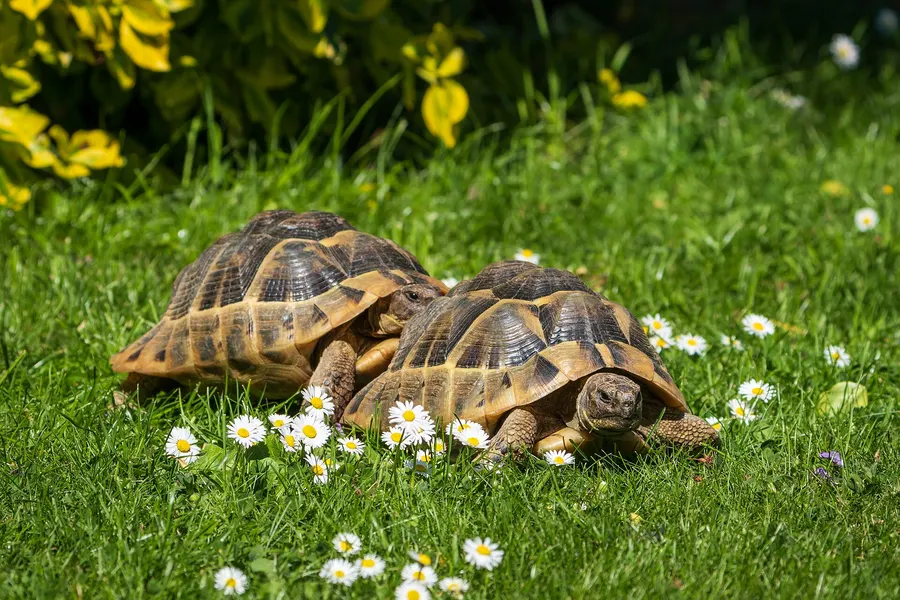
Building an outdoor tortoise enclosure
How to build a safe outdoor tortoise enclosure in a UK garden: sunny spot, escape-proof walls, digging barrier, shelter, planting and protection from predators.
Real sunshine is the best thing you can give a tortoise. On warm days from late spring to early autumn, a secure outdoor enclosure lets them graze, bask and behave like tortoises.
The spot
- South or south-west facing, with sun most of the day
- Some shade too: a shrub or a slab propped against the wall
- Well drained. Tortoises hate cold, wet ground.
Walls and floor
- Solid walls they can't see through. Tortoises try to walk through things they can see through. Wood boards, sleepers or bricks work.
- Height: at least twice the shell length, more for climbers.
- Sink the walls or lay wire mesh under the edges, 10–15 cm down. Tortoises dig.
- Corners: add a lip or overhang inside if yours tries to climb.
Shelter and warmth
British summer days can turn cold fast. Give them a cold frame, mini greenhouse or insulated house where they can warm up. Many keepers fit a heat lamp inside for cool mornings (only use outdoor-rated fittings and a safe electrical supply).
Planting
Plant or sow food plants: dandelion, plantain, clover, sedums and grasses. Check every plant you add is safe. Remove buttercups, foxglove, ivy, daffodils and other bulbs.
Predators
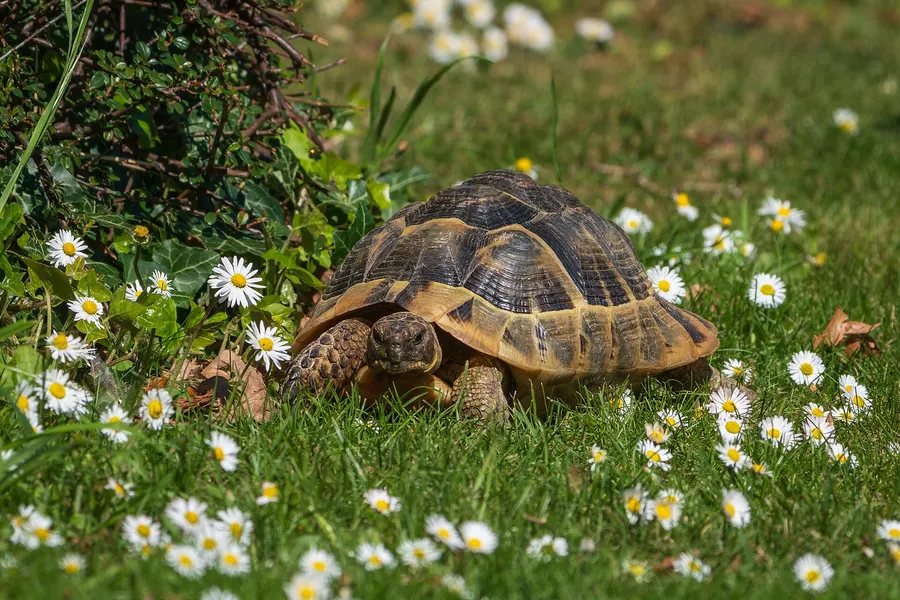
Young tortoises are vulnerable to rats, magpies, crows, foxes and dogs. Cover small enclosures with a mesh lid. Bring youngsters in at night.
When to bring them in
If it's cool, wet or overcast all day, they're better on their indoor table. A cold tortoise can't digest the food it ate and can't fight off infection.
Checked November 2026. General information, not veterinary advice.